sky lupine
Lupinus nanus
Member of
lupines (genus Lupinus)
legume family (family Fabaceae)
dicots (class Magnoliopsida)
blue in flowering plants
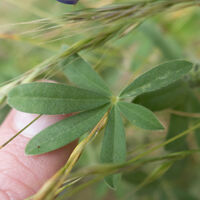
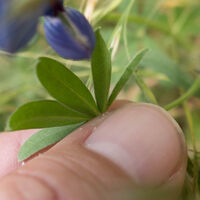
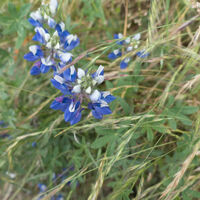
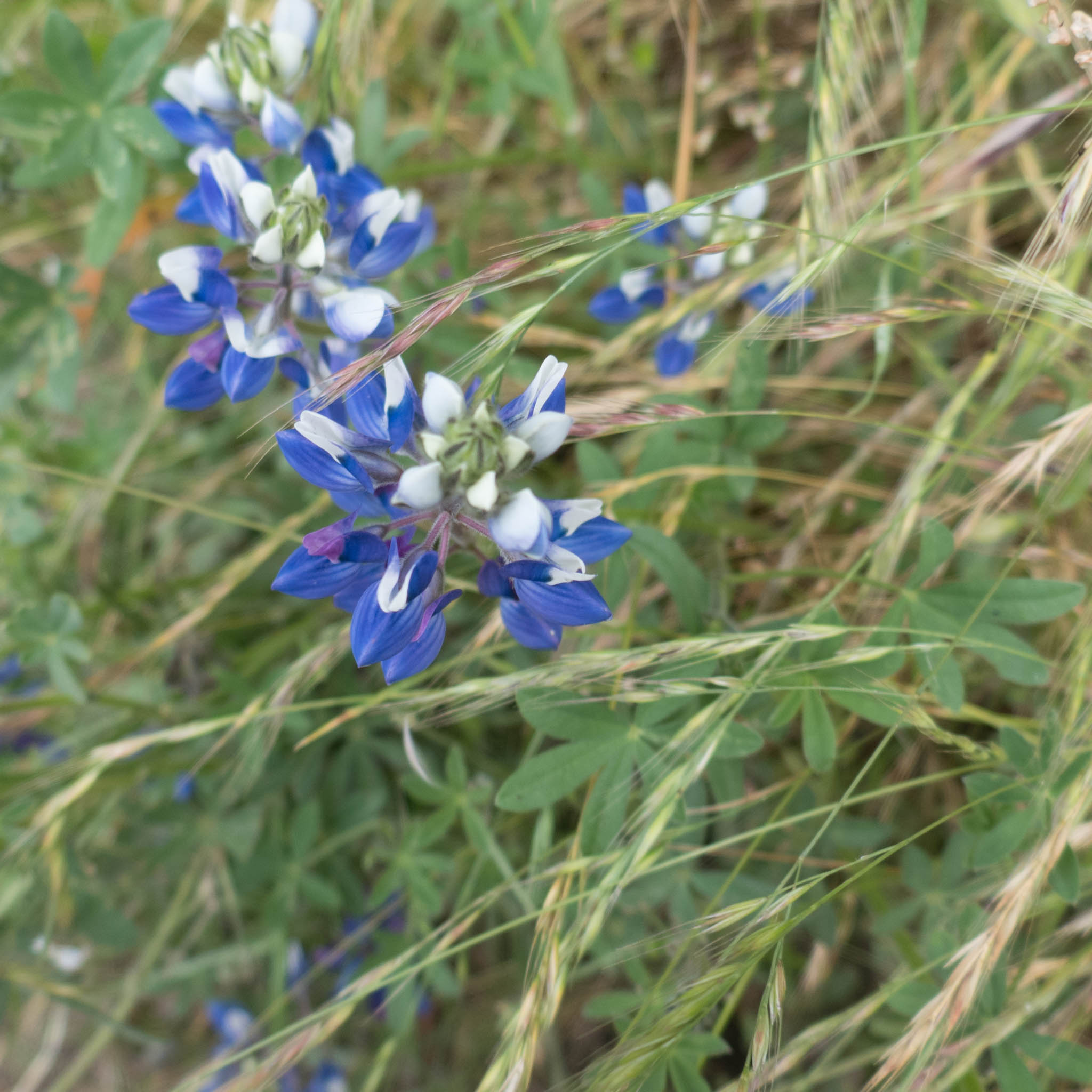
- habit: annual 10–60 cm, hairy
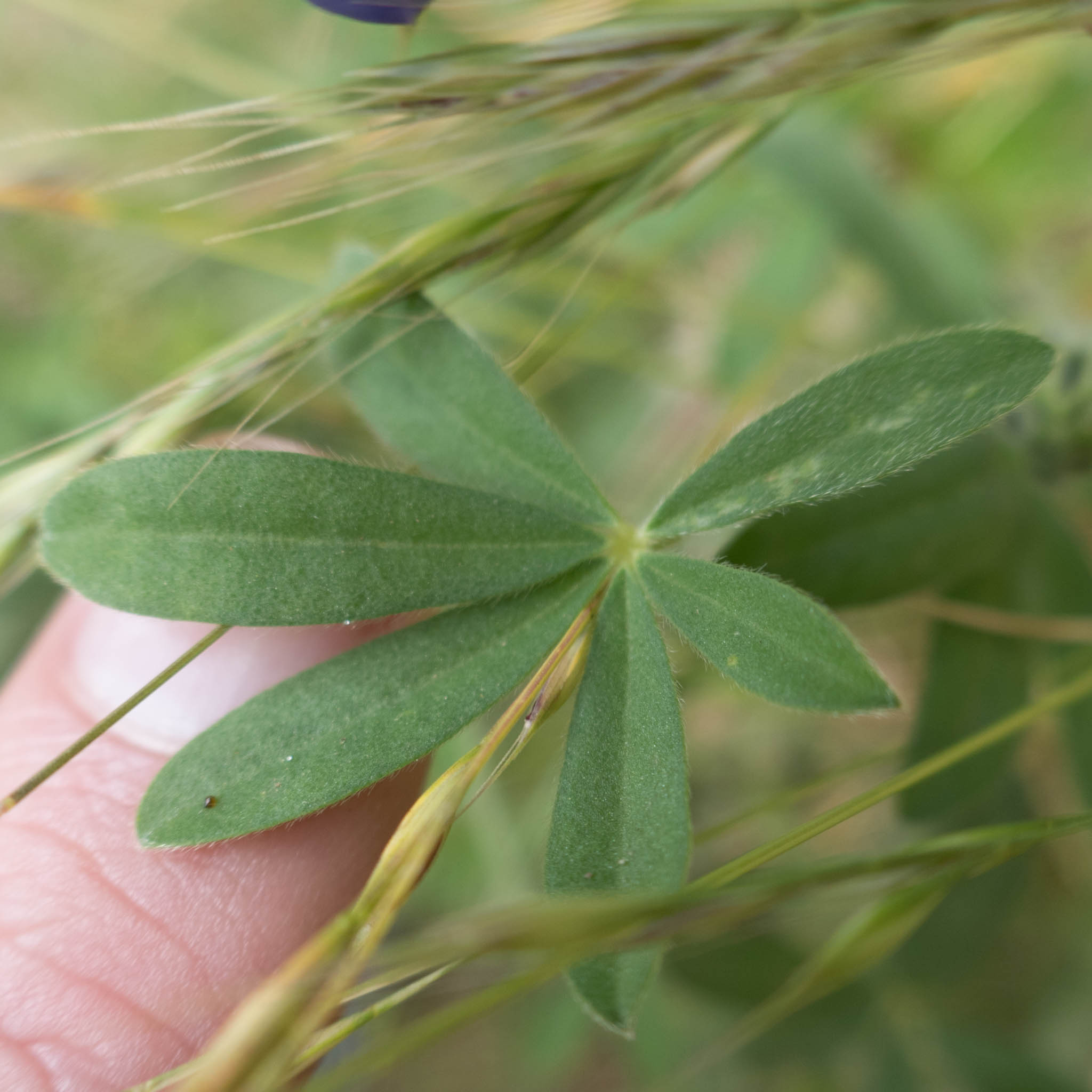
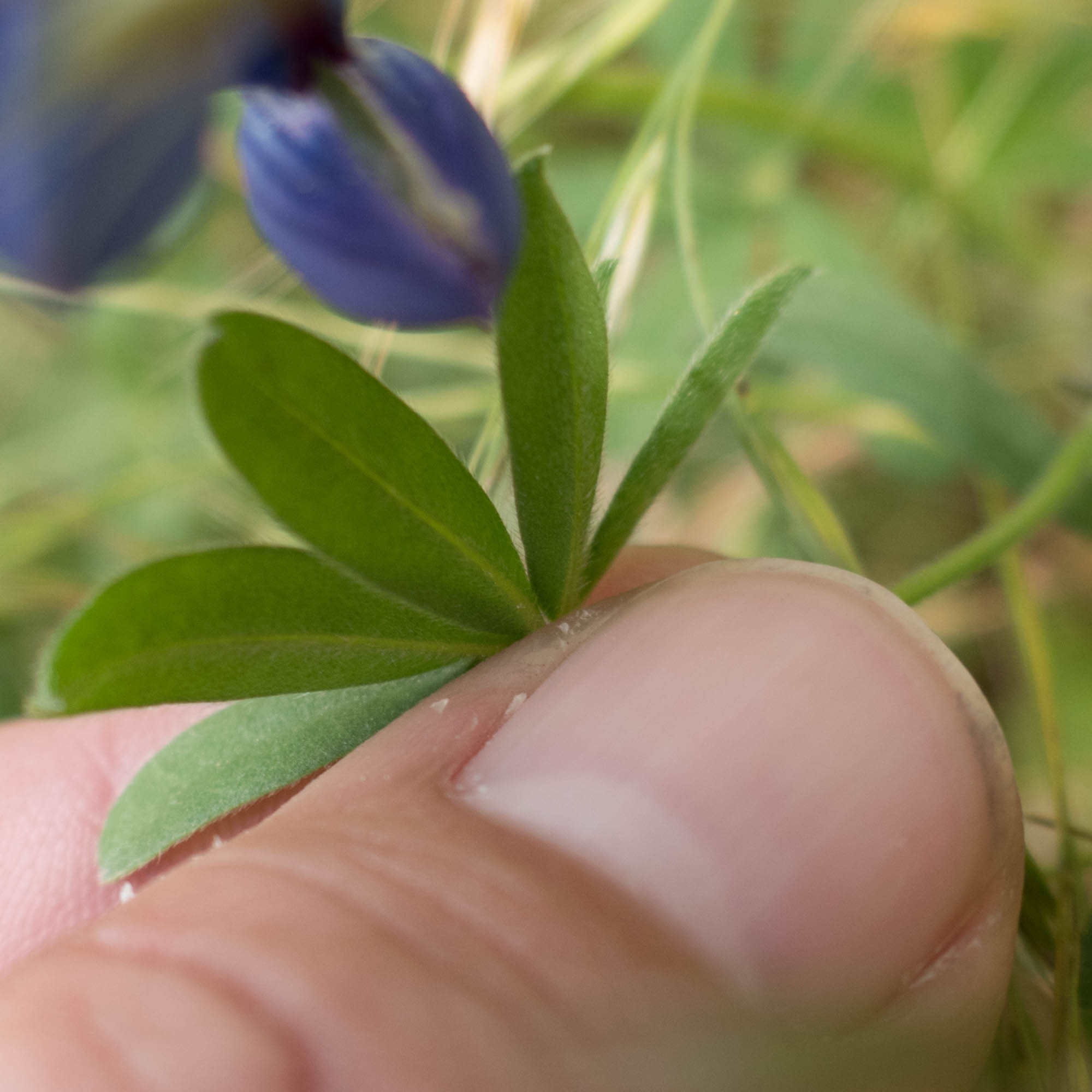
- leaf: petiole 2–8.5 cm; leaflets 5–9, generally 7, 10–40 mm, 1–12 mm wide, occasionally linear, adaxially hairy
- inflorescence: 2–20 cm, flowers generally whorled; peduncle 2–15 cm; pedicels 2.5–7 mm; bract 4–12 mm
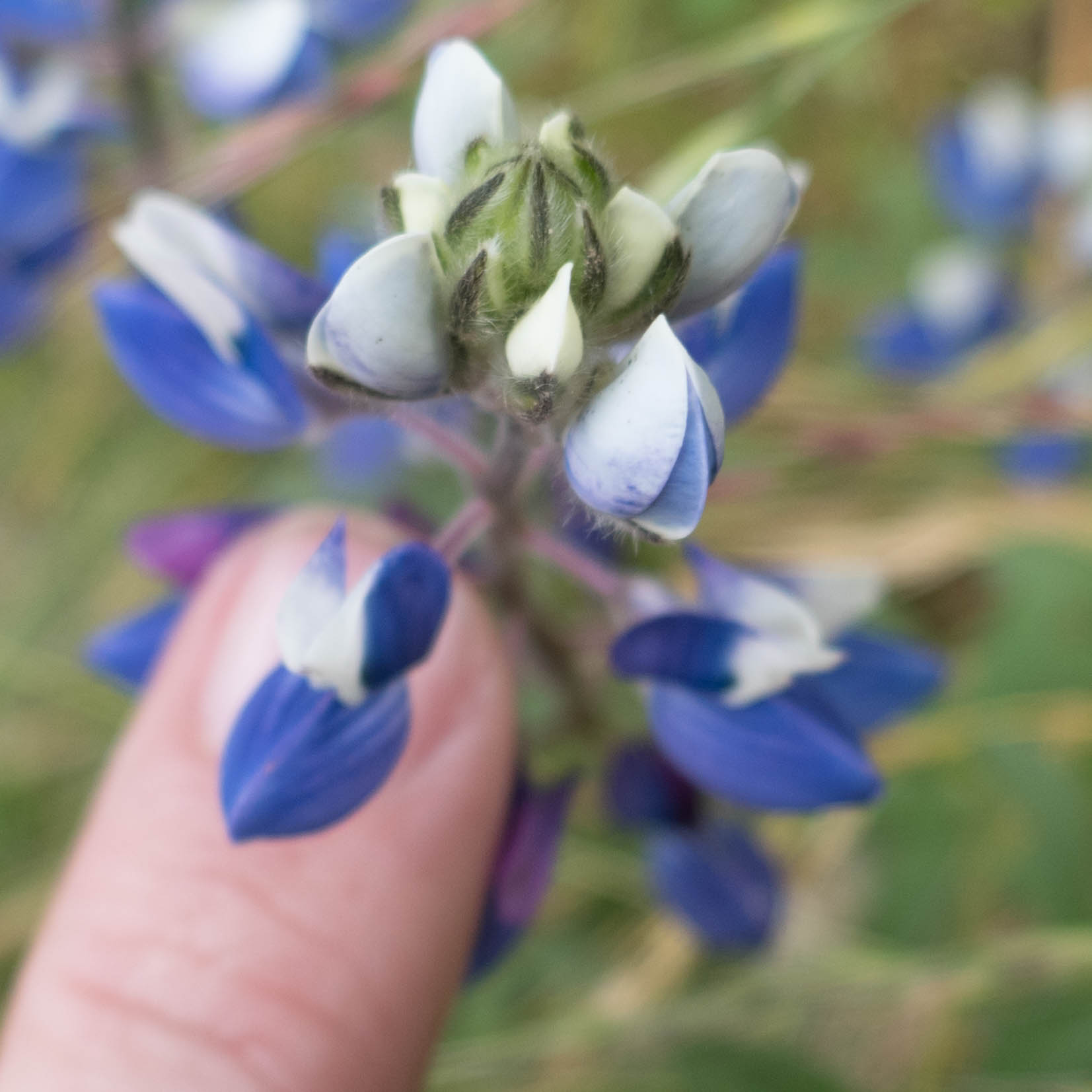
- flower: 6–15 mm; calyx 4–8 mm, lips ± equal, upper deeply lobed; petals blue (light blue), lavender, pink, or white, banner as wide or wider than long, spot white
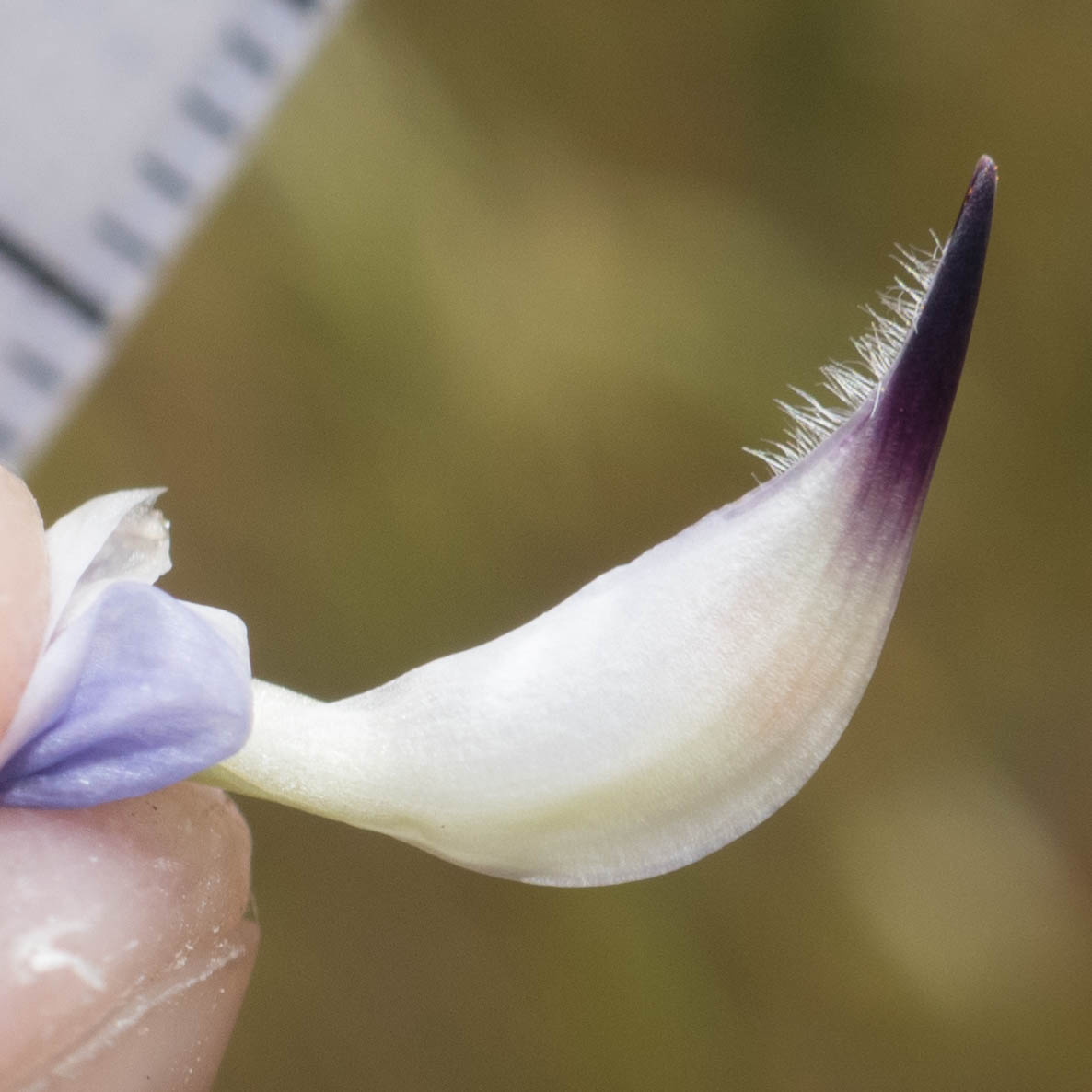
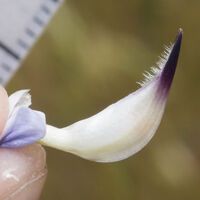
- keel upper margins without tooth, ciliate near tip, lower glabrous
- compared to miniature lupine (Lupinus bicolor):
- plant is generally taller (but not always)
- flowers are a bit more blue than purple
- upper keel margins are “flat” (not humped) in the center
- common
Toxicity of blue bonnet, lupine (Lupinus spp.):
4 – Ingestion of these plants, especially in large amounts, is expected to cause serious effects to the heart, liver, kidneys or brain. If ingested in any amount, call the poison center immediately.
Chris’s observations: 26 (7 are research grade)
Locations:
- Calero CP: 4
- Edgewood County Park & Natural Preserve: 3
- Russian Ridge OSP: 3
- Wilder Ranch SP: 3
- Andrew Molera SP: 2
- Joseph D. Grant CP: 2
- Sierra Azul; OSP: 2
- Coyote Lake / Harvey Bear Ranch CP
- Fort Ord NM
- Henry Coe SP
- Monte Bello OSP
- Pleasanton Ridge RP
- Rancho Cañada del Oro OSP
- UCSC Campus Natural Reserve
Months:
- Mar.: 8
- Apr.: 7
- May: 6
- Jun.: 2
- Jul.: 3
For more details, use advanced search.
Taxon info:
iNaturalist
–
Calflora
–
CalPhotos
–
Jepson eFlora
–
FNA
Bay Area species:
iNaturalist
–
Calflora